Back-to-School Doesn't Have to Mean Dinner Stress
Back-to-school season brings a familiar rhythm: earlier mornings, homework, practices, activities, work, and a calendar that seems to fill up overnight. And somewhere in the middle of all that chaos, someone still has to figure out what's for dinner.
When evenings get busy, it's easy to fall into the cycle of takeout, convenience foods, or simply throwing together whatever happens to be in the refrigerator. But family meals don't have to be complicated, and healthy eating doesn't require you to prepare elaborate dinners from scratch every night.
The key is having a few simple meal-planning strategies you can rotate depending on what your day looks like.
Here are three strategies that can make back-to-school dinners easier, faster, and less stressful.
1. Don't Rely on Just One Meal-Planning Method
The secret to successful meal planning isn't finding the perfect system.
It's having multiple systems you can use depending on how much time and energy you have on a given day.
Three particularly useful approaches are:
Assembly meals
Time-block meals
Freezer meals
Each has its strengths. Together, they can make busy weeks much more manageable.
Assembly Meals: Your Busy-Day Lifesaver
Sometimes you don't have 45 minutes to cook dinner.
You have 15 minutes before soccer practice.
Or 10 minutes before someone needs to leave for an activity.
That's where assembly meals shine.
Think:
Sandwiches
Snack plates
Salads
Grain bowls
Leftover meals
Wraps
The basic formula is simple:
Protein + whole grain + fruit or vegetable.
For example, you might make turkey and cheese sandwiches with apples and carrots. Or assemble a bowl with leftover chicken, brown rice, vegetables, and a simple sauce.
Assembly meals can save significant time because you're putting together ingredients rather than actually cooking a complete meal.
The downside?
If you rely on them every night, they can become more expensive and may offer less variety.
That's why they're best viewed as a tool in your toolbox, not your only strategy.
Time-Block Meals: Work Smarter, Not Harder
You don't have to do all of your meal preparation at 5:30 p.m.
Instead, look for small pockets of time throughout your day.
Have 10 minutes while dinner is cooking?
Chop tomorrow's vegetables.
Have 15 minutes on Sunday?
Cook a batch of rice or another whole grain.
Know you're making chicken tomorrow?
Marinate it tonight.
You can:
Chop vegetables ahead of time
Cook grains
Marinate meat
Wash and portion produce
Prepare sauces
Cook protein in advance
These small tasks may not feel significant individually, but they can dramatically reduce the amount of work required when dinner time arrives.
Ten minutes here and there can make dinner feel much less overwhelming.
Freezer Meals: Future You Will Thank You
One of the easiest ways to build a collection of homemade convenience meals is to make extra when you're already cooking.
Making lasagna?
Double the recipe.
Making enchiladas?
Make another pan.
Cooking soup?
Make a larger batch.
Preparing a casserole?
Freeze half.
Over time, those extra portions accumulate into something incredibly valuable: a freezer full of meals you can pull out when life gets crazy.
You don't need to spend an entire weekend preparing 20 freezer meals.
Instead, simply make a little extra whenever you're already cooking.
Eventually, you'll have your own collection of homemade convenience food ready for those nights when cooking isn't realistic.
2. Fix the Part You Struggle With Most
Sometimes dinner stress isn't actually about cooking.
Maybe you don't know what to make.
Maybe your kids are picky eaters.
Maybe grocery shopping feels overwhelming.
Maybe you buy produce with good intentions but never get around to washing or preparing it.
Maybe cooking itself is the problem.
Whatever it is, identify your biggest obstacle.
Ask yourself:
"What part of feeding my family is creating the most stress?"
Then solve that problem first.
If meal ideas are the issue, create a list of 10 family-approved dinners that you can rotate.
If grocery shopping is the problem, use a consistent grocery list and shop on the same day each week.
If produce goes bad, buy smaller quantities or prepare it immediately when you get home.
If cooking takes too long, focus on simpler recipes and assembly meals.
If picky eating is the challenge, find ways to offer familiar foods alongside new foods without turning every meal into a battle.
You don't need to overhaul your entire food system at once.
Solve one problem, then move on to the next.
Small improvements compound.
3. Remember Why Family Meals Matter
Meal planning isn't just about saving time.
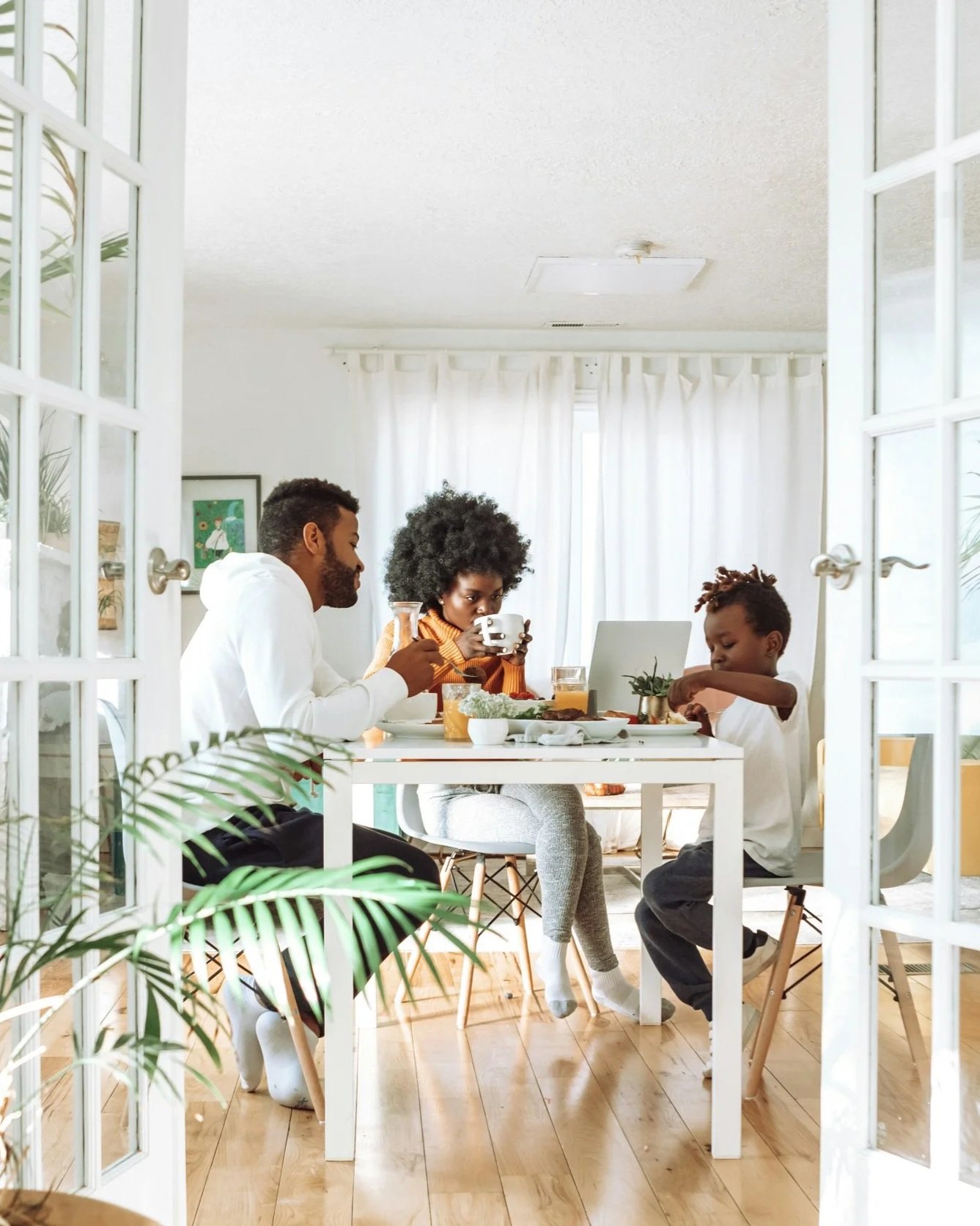
It's also about creating opportunities for your family to sit down and eat together.
Regular family meals have been associated with a variety of positive outcomes, including better overall diet quality and nutrition, healthy growth, and positive social and emotional outcomes for children and adolescents.
Family meals can also provide an opportunity to talk about the day, connect with one another, and establish healthy routines around food.
And those benefits don't require a gourmet dinner.
A family meal can be homemade lasagna.
It can be sandwiches and fruit.
It can be leftovers.
It can even be breakfast for dinner.
The goal isn't to create a picture-perfect meal.
The goal is to create more opportunities to eat together.
Progress Over Perfection
Here's the most important thing to remember:
Healthy family meals don't happen by accident. They happen with a plan.
But that plan doesn't need to be complicated.
Use assembly meals when you're short on time.
Use time-blocking to spread preparation throughout the week.
Use freezer meals to create your own homemade convenience food.
And when something isn't working, don't throw out the entire system. Identify the biggest obstacle and solve that one problem.
You don't have to make dinner perfect every night.
You simply need a system that works most of the time.
The Bottom Line
Back-to-school season is busy enough without making dinner another source of stress. A few minutes of planning can help you save time, reduce decision fatigue, and create more opportunities to put nutritious food on the table.
Mix your meal-planning strategies. Solve your biggest challenge first. Prioritize family connection over perfection.
Because at the end of the day, the best family meal isn't necessarily the most impressive one.
It's the one that gets everyone around the table.
If you’d like personalized guidance on what this means for you and your family, don’t hesitate to CONTACT US.
We’re here to help.
